A pool that needs topping off once in a while is normal. A pool that keeps dropping, leaves wet ground nearby, or forces your autofill to run more than usual is usually telling you something else. If you are wondering how to detect pool leaks without jumping straight into expensive repairs, the key is to separate normal evaporation from actual water loss and then narrow down where that loss is happening.
That matters more than many owners realize. A leak is not just a water bill problem. It can affect chemical balance, strain equipment, soften surrounding ground, damage finishes, and in some cases create structural movement around the pool or deck. For villas, communities, and hospitality properties, it also becomes an operations issue fast.
How to detect pool leaks: start with the obvious signs
The first step is not a pressure test or a full technical inspection. It is observation. Many leaks leave a pattern before they leave a clear source.
If your pool level drops faster than expected, that is the most obvious sign, but it should be judged carefully. In hot weather, with wind, direct sun, and active swimmers, water loss from evaporation can be noticeable. That is especially true in exposed outdoor pools. Still, if you are adding water every few days, or the level keeps falling to the same point, that is no longer a detail to ignore.
Other signs can be just as useful. You may see unusually high chemical consumption because fresh makeup water keeps diluting the balance. You may notice air in the pump basket, reduced suction, damp soil around the shell, loose pavers, algae that returns quickly despite treatment, or cracks that seem to stay wet. In equipment rooms, a slow drip around valves, filters, unions, or pumps can waste more water than owners expect.
One practical clue is whether the water stops dropping at a certain height. If it does, that level often lines up with the leak source. It could point to a skimmer throat, a return fitting, a light niche, or a crack in the finish at that exact elevation.
Rule out evaporation with the bucket test
If you want a reliable first check, the bucket test remains the simplest way to compare evaporation against actual loss.
Fill a bucket with pool water and place it on a pool step so the water inside the bucket sits close to the same level as the pool water outside. Mark both levels. Then leave the pool system off for 24 hours, and compare the drop inside the bucket with the drop in the pool.
If the pool loses significantly more water than the bucket, you are likely dealing with a leak. If both levels drop about the same amount, evaporation is the more likely explanation.
Then repeat the same test with the circulation system running. This second step matters because it helps narrow down the category of leak. If the pool loses more water when the system is on, the issue may be in the pressure side plumbing, suction line, filter area, or equipment pad. If the loss is similar with the system off, the leak is more likely in the pool shell, fittings, or static plumbing below water level.
This is not a complete diagnosis, but it gives you direction before you spend time in the wrong area.
Check the equipment pad before assuming the worst
A surprising number of “pool leaks” are not in the pool shell at all. They start at the equipment area, where small failures are easy to miss because water evaporates or drains away before it forms a large puddle.
Inspect around the pump, filter, multiport valve, heater, chlorinator, salt cell, and visible plumbing connections. Look for white mineral residue, rust marks, persistent moisture, or slow drips under pressure. Even a minor leak at a union or valve can add up over days and weeks.
Pay attention to when the area gets wet. If water appears only while the system is running, that points to a pressure-side issue. If air enters the pump basket or the pump struggles to prime, that can indicate a suction-side leak, which may not always show visible water because it pulls air in rather than pushing water out.
This is also where trade-offs matter. Replacing a visible seal or tightening a fitting may solve a minor issue quickly. But if signs suggest underground plumbing loss, guessing can waste time and money.
Inspect the pool shell, fittings, and common leak points
When the equipment area checks out, move back to the pool itself. Most structural or fitting-related leaks occur in repeat locations.
Start with the skimmer. The joint between the plastic skimmer body and the surrounding pool structure is a common failure point, especially in older pools or those exposed to movement and temperature shifts. Check return inlets, the main drain area if visible, vacuum lines, steps, corners, tile lines, and any visible crack in the plaster or finish.
Pool lights are another common source. The conduit behind the light niche can leak even when the niche itself looks fine. If the water level drops and then stabilizes around the level of the light, that is worth attention.
A dye test can help confirm whether a suspected area is actively drawing water. With the pump off and the water still, release a small amount of leak detection dye or food coloring near a crack, fitting, or seam. If the dye gets pulled into the area, that suggests suction caused by a leak. This method works best for localized confirmation, not for finding a hidden plumbing break somewhere underground.
How to detect pool leaks in plumbing lines
Plumbing leaks are harder to locate because the damaged section is often out of sight, under decking or landscaping. Still, there are patterns that help narrow them down.
If water loss increases only when the system runs, suspect circulation lines first. Pressure-side leaks often show up as soggy ground, unexplained settling, or water movement near return line routes. Suction-side leaks may cause poor priming, bubbles at the returns, or intermittent pump performance.
Isolating lines can help, but this is where DIY efforts reach their limit quickly. Closing valves and testing one section at a time may provide clues if the system is designed for it. But many installations need professional pressure testing with specialized equipment to confirm which line is failing and whether the issue is a joint, a cracked pipe, or a fitting underground.
That distinction matters because the repair approach changes. Sometimes a localized repair is enough. In other cases, rerouting a line is more reliable than opening a large section of deck to chase a small break.
When the leak may be structural
Not every crack leaks, and not every leak comes from a dramatic crack. Hairline surface cracks in plaster may be cosmetic, while movement cracks through the shell are more serious.
A structural leak becomes more likely when you see persistent cracking combined with water loss, damp soil outside the pool, settlement in nearby paving, or repeated failure around rigid fittings. Older pools, heavily renovated pools, and pools with past ground movement deserve a more careful diagnosis.
This is one reason professional leak detection is often cheaper than trial-and-error repair. If you patch the wrong crack, replace the wrong fitting, or dig in the wrong place, the real cost arrives later.
When to call a pool leak detection specialist
If the bucket test indicates a leak, the water level keeps dropping, and the source is not clearly visible, it is time to escalate. The same applies if you manage a community or hotel pool where downtime, guest complaints, and water treatment instability create operational pressure.
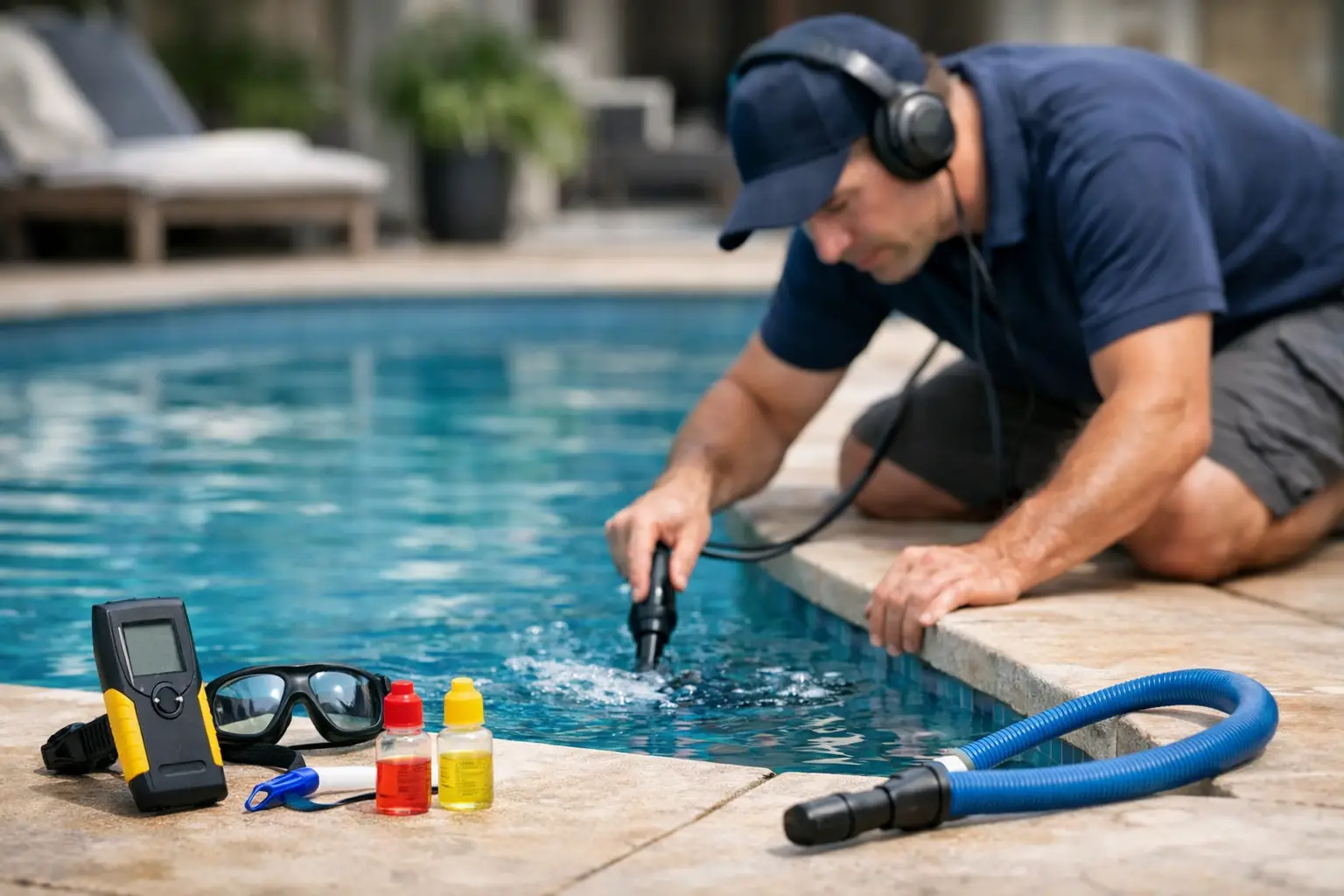
A specialist can combine pressure testing, dye testing, line isolation, and acoustic or electronic methods to locate the leak more precisely. That reduces unnecessary demolition and usually shortens repair time. For properties in coastal areas such as Marbella, Mijas Costa, or Estepona, where pools often operate heavily through warm months, a faster diagnosis can prevent a small issue from becoming deck damage, equipment wear, or avoidable water waste.
Infinity Brand approaches this type of issue the same way a good technical team should – confirm the category of leak first, isolate the source, and only then define the repair. That keeps the process clear and the budget grounded in evidence rather than guesswork.
A practical way to respond today
If you suspect a leak, do three things now. Mark the water level, run a bucket test over 24 hours, and inspect both the equipment pad and the pool fittings at the level where the water seems to stop. Those steps give you useful data instead of assumptions.
If the signs point to a real leak, acting early is usually the cheaper move. Pools rarely fix themselves, and minor water loss has a way of spreading into chemical imbalance, damaged surfaces, and avoidable repair scope. The best next step is not panic – it is a clear diagnosis, done before a manageable issue turns into a larger one.