A pool rarely becomes unsafe all at once. More often, the problem builds quietly – a gate that no longer self-latches, a drain cover past its service life, cloudy water after a filtration issue, or missing records when an inspection is due. That is why a practical pool safety compliance checklist matters. It turns safety from a vague intention into a repeatable process that owners, managers, and operators can actually control.
For private villas, community pools, and hospitality properties, compliance is not just about passing an inspection. It is about reducing preventable incidents, protecting users, and avoiding the kind of operational gaps that become expensive fast. The right checklist also helps separate urgent problems from routine maintenance, which is where many facilities lose time and money.
What a pool safety compliance checklist should cover
A useful checklist does more than list obvious hazards. It should help you verify physical safety barriers, water quality, mechanical systems, signage, emergency readiness, and documentation. If one of those areas is missing, your process is incomplete.
The exact requirements depend on the pool type, local code, and whether the property is residential, shared-use, or commercial. A hotel pool has different obligations than a private home, and a community pool usually sits somewhere in between. That means the checklist should be structured, but not generic.
In practice, the most reliable approach is to divide compliance into daily, weekly, monthly, and seasonal checks. Daily controls catch immediate risk. Monthly and seasonal reviews catch wear, hidden failures, and paperwork gaps that are easy to overlook.
Start with barriers and access control
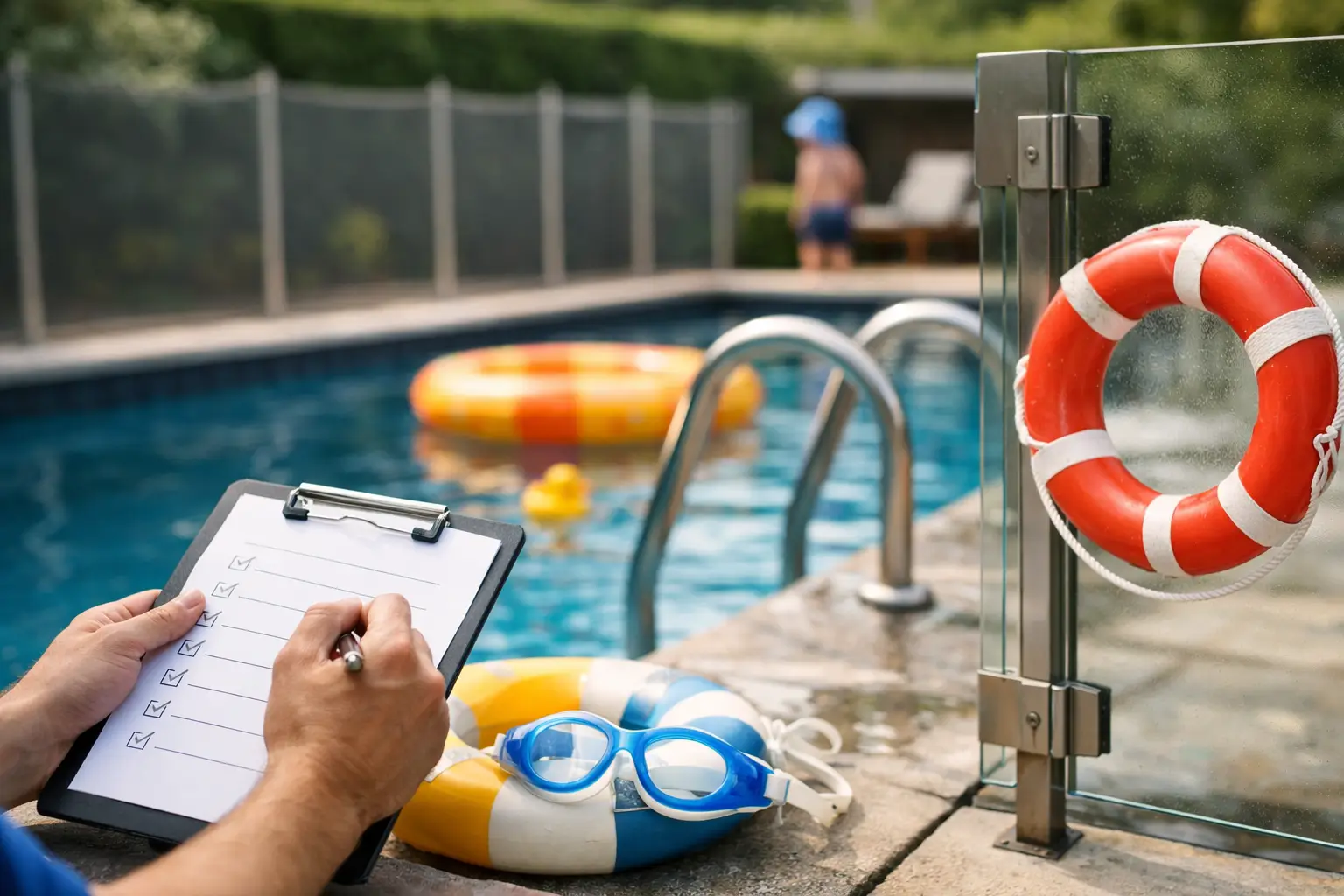
If there is one area that deserves zero compromise, it is access control. Fencing, gates, locks, and entry points are your first line of prevention, especially where children or unsupervised guests may be present.
A compliant setup generally includes a perimeter barrier of the required height, gates that self-close and self-latch, and hardware placed where it cannot be easily reached by small children. But technical compliance on paper is not always enough. A gate can meet the original standard and still fail in real use because the hinge drags, the latch sticks, or the alignment has shifted after months of wear.
This is where site inspections matter. Open and close every gate. Confirm that it latches every time without manual help. Check whether furniture, planters, or stored equipment create unintended climb points near the fence. These details are often missed because they seem minor until an incident happens.
For homes, the trade-off is usually between convenience and control. Owners sometimes disable gate closers because they find them annoying. For shared or commercial pools, the issue is often volume of use. Heavy traffic accelerates wear, so access hardware needs more frequent review.
Barrier check points to verify
Your inspection should confirm fence integrity, gate self-closing function, latch reliability, lock condition, and clear separation from climbable objects. It should also note any damaged panels, corrosion, or loose posts. If the pool has a cover, verify that it is rated for safety use if you rely on it as part of the protection strategy. Not all covers are safety covers.
Water quality is a safety issue, not just a maintenance issue
Many owners think of water chemistry as a comfort or cleanliness matter. It is more serious than that. Water that falls outside safe operating ranges can irritate skin and eyes, reduce sanitizer effectiveness, obscure visibility, and increase the risk of harmful contamination.
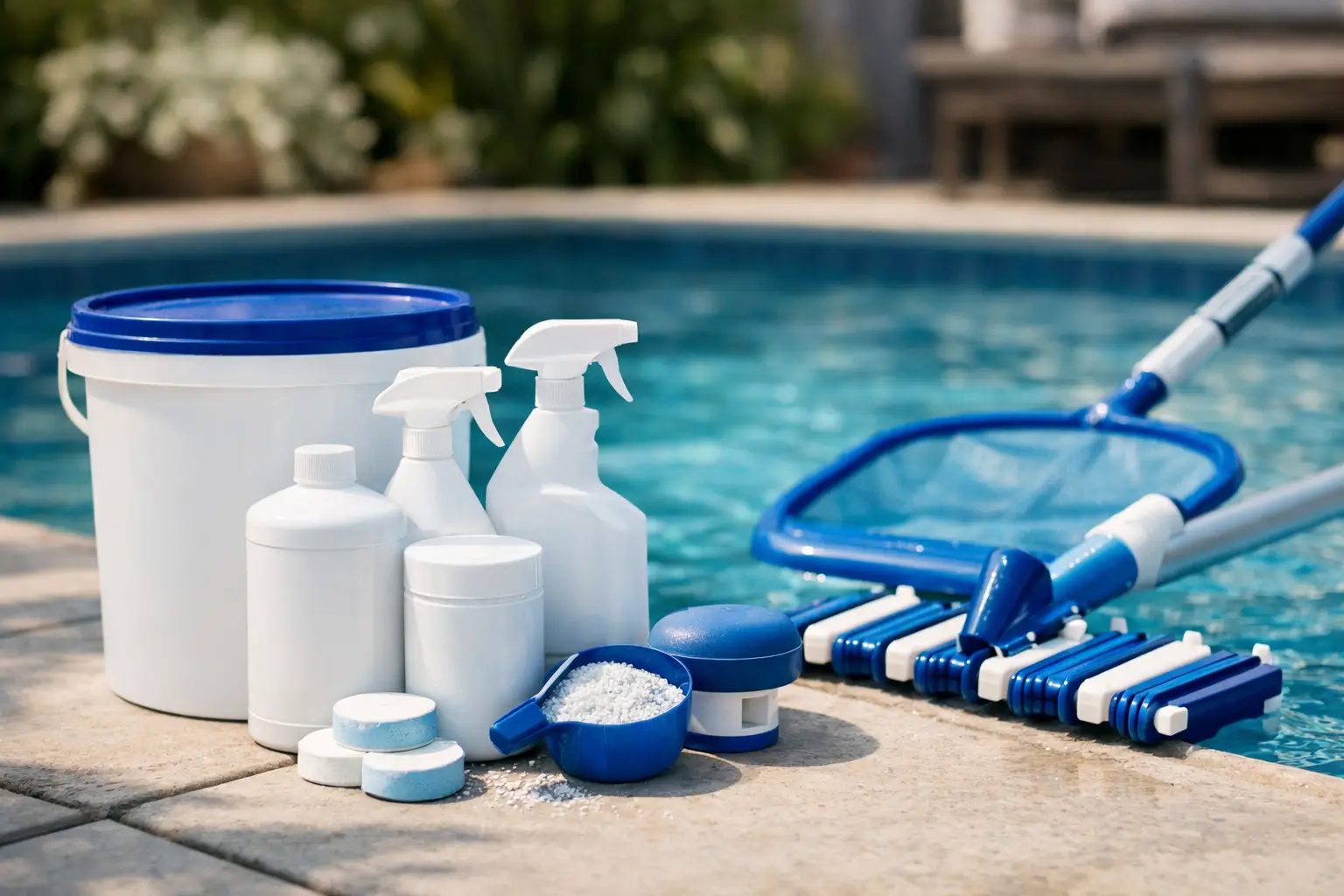
A pool safety compliance checklist should include testing frequency, acceptable parameter ranges, corrective actions, and recordkeeping. At minimum, this usually means sanitizer level, pH, total alkalinity, and water clarity. Depending on the installation, cyanuric acid, calcium hardness, and temperature may also need routine control.
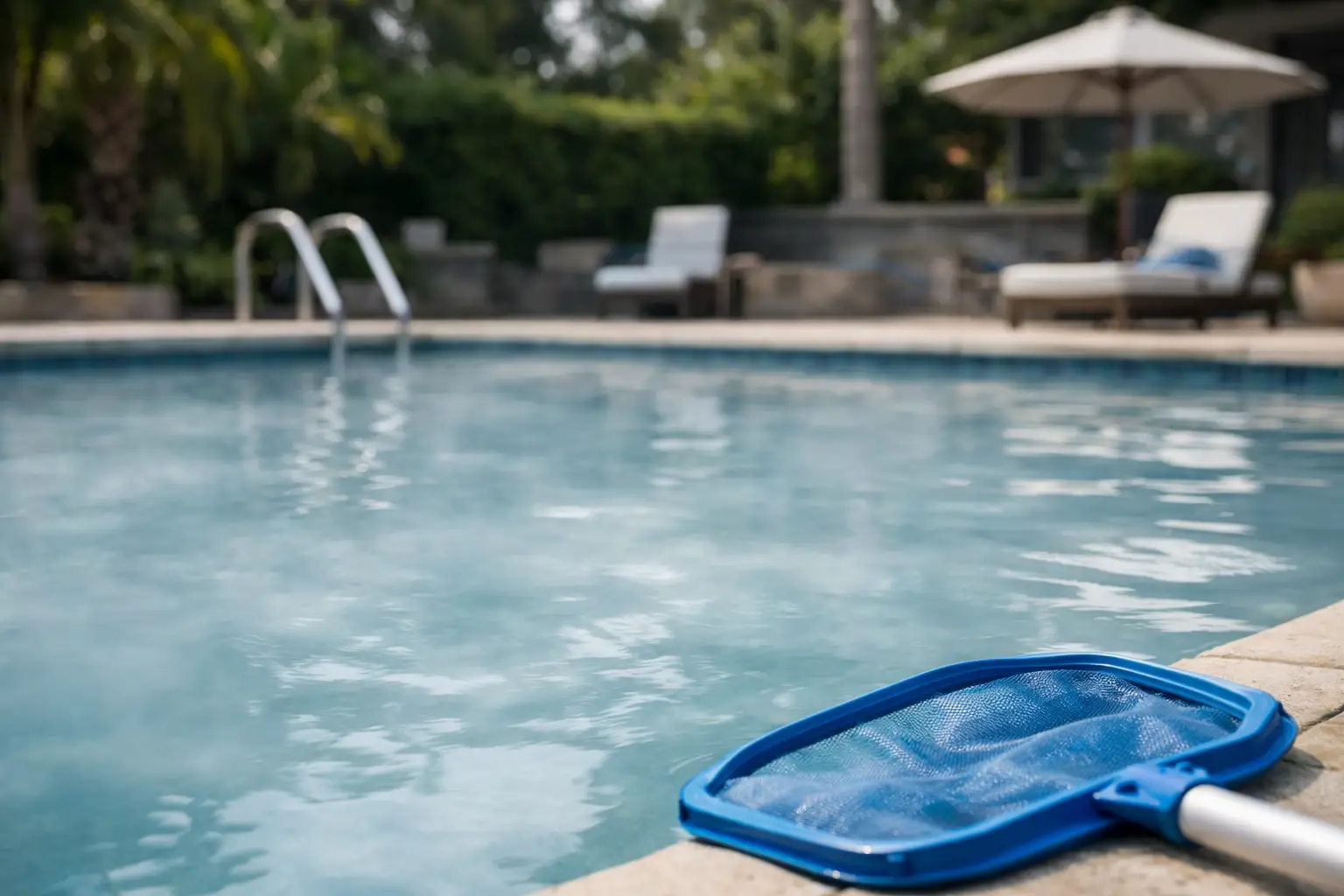
Clarity deserves special attention. If the main drain is not clearly visible from the deck, the pool should not be considered safe for use. Poor visibility makes it harder to identify a swimmer in distress and usually points to a filtration or chemistry issue that needs immediate correction.
Commercial and high-use pools need tighter operational discipline because bather load changes water conditions quickly. In those cases, the difference between compliant and non-compliant water can happen within hours, not days. For residential pools, the risk often comes from irregular testing or overcorrecting with chemicals without understanding the cause.
Mechanical systems and entrapment prevention
Behind many safety failures is a technical issue that looked like a maintenance problem. Pumps, filters, drains, suction lines, lights, timers, and chemical dosing systems all affect safe operation.
Drain covers should be inspected for cracks, looseness, and expiration based on manufacturer guidance. This is not an area for guesswork. A damaged or outdated drain cover can create serious entrapment risk. If the pool uses suction outlets, anti-entrapment measures should be confirmed as part of the inspection routine, especially after repairs or renovations.
The circulation system also matters because poor turnover can undermine water quality and create dead zones. Check pump operation, filter pressure, valve condition, and any unusual noise or vibration. A system can still run while performing badly, and that partial failure tends to show up first as cloudy water, unstable chemistry, or higher energy use.
Underwater lighting should be secure and functioning properly, with no signs of water ingress, cracked fittings, or exposed wiring. Electrical safety around the equipment pad deserves the same level of attention. Moisture, age, and outdoor exposure make preventive inspection essential.
Deck condition, depth markings, and visible warnings
Slip hazards and poor visual communication cause more problems than many operators expect. The deck should be clean, stable, and free of algae buildup, standing water, trip hazards, and broken surfaces. Even a well-maintained pool becomes harder to manage if the surrounding area encourages falls.
Depth markers should be visible and accurate. If they are faded, damaged, or covered by later finishes, replace them. The same applies to no diving warnings where depth or configuration makes diving unsafe. Signage does not replace supervision, but it does support it.
There is some nuance here. A private backyard pool does not need to look like a commercial facility, and too much signage can feel intrusive in a high-end residential setting. Still, aesthetics should not remove essential warnings. The goal is to present safety information clearly without creating clutter.
Emergency readiness is part of compliance
A checklist that ignores emergency response is incomplete. If someone slips, suffers a medical event, or becomes distressed in the water, the first minutes matter.
For shared-use and commercial settings, confirm that rescue equipment is present, accessible, and in good condition. That may include a life ring, reaching pole, first aid kit, and emergency contact information displayed where staff and users can find it quickly. If the site requires trained personnel, certifications and staffing schedules should be current and documented.
Even for residential properties, some form of emergency preparation makes sense. At minimum, owners should know where shutoffs are located, keep basic rescue equipment nearby, and make sure guests understand pool rules. Luxury properties and short-term rental homes need extra attention because users may be unfamiliar with the layout or safety features.
Documentation is what proves control
One of the most overlooked parts of any pool safety compliance checklist is the paper trail. You may be testing, cleaning, and checking equipment regularly, but if nothing is documented, you cannot easily prove that the work happened.
Good records should show inspection dates, water test results, corrective actions, repairs completed, parts replaced, and any incidents reported. For administrators and hotel operators, documentation supports accountability across teams. For homeowners, it creates continuity when service providers change or when a technical issue needs diagnosis later.
This is also where a single-provider service model becomes useful. When the same team handles maintenance, technical service, repairs, and upgrade recommendations, there is less fragmentation in the records and fewer blind spots between visits. That continuity often improves compliance because issues are tracked instead of repeatedly rediscovered.
How often should you review the checklist?
It depends on pool use, exposure, and complexity. A lightly used private pool may only need certain compliance items reviewed monthly, while a community or hospitality pool may require daily logging and more formal periodic inspections.
Season changes also affect the schedule. Before peak use periods, review barriers, chemistry control, circulation performance, deck condition, and emergency equipment together rather than as isolated tasks. After storms, heavy wind, or periods of vacancy, perform an additional inspection. Environmental conditions common in coastal areas such as Marbella, Mijas Costa, and Estepona can accelerate wear on metal components, gates, covers, and electrical fittings, so preventive checks often pay for themselves.
When a checklist is not enough
A checklist is a control tool, not a substitute for expertise. If water chemistry keeps drifting, if a gate repeatedly loses alignment, if suction fittings are outdated, or if the deck has recurring slip issues, the answer is not to keep ticking the same box. It is to diagnose the root cause and correct it properly.
That is where technical support matters. A structured inspection can tell you what is wrong. An experienced service team can tell you why it keeps happening and what fix will actually hold over time.
The best pool safety compliance checklist is the one that gets used consistently, updated when the installation changes, and backed by clear action when something fails. Safety works when it is operational, not theoretical. If your pool setup feels one repair, one inspection, or one busy season away from a problem, that is usually the right moment to tighten the process and bring every control back into view.
A safer pool is rarely the result of one big upgrade. More often, it comes from a hundred small checks done on time, with the right standard and no guesswork.