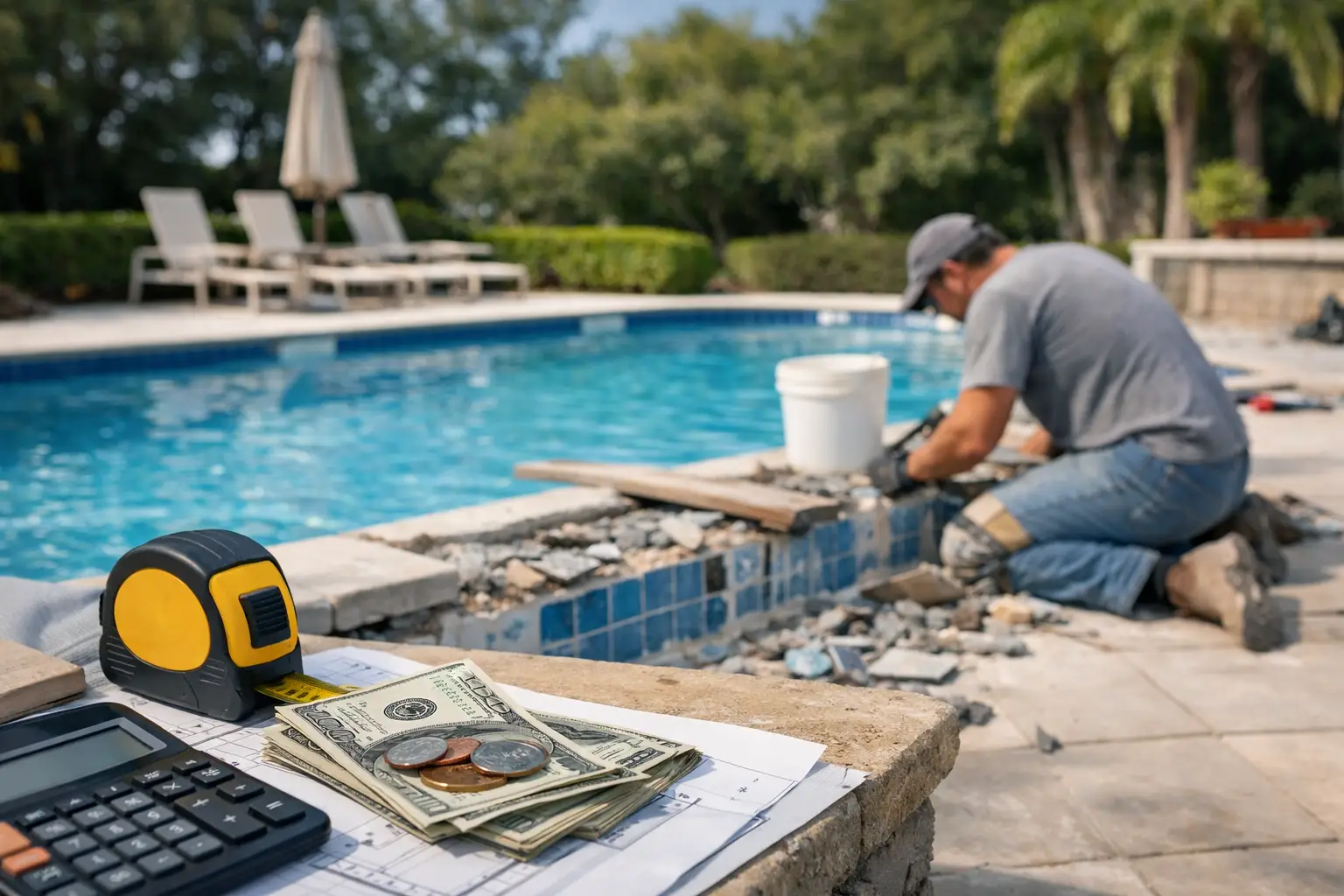
If you’re asking how much does pool renovation cost, you’re usually already seeing the signs: rough plaster, fading tile, dated coping, rising utility bills, or equipment that keeps needing service. The short answer is that pool renovation pricing can range from a few thousand dollars for targeted updates to tens of thousands for a full overhaul. The real answer depends on what is being renovated, what condition the pool is in, and whether hidden issues show up once work begins.
For homeowners, communities, and hotels, the most useful way to budget is not to look for one average number. It is to break the project into parts and understand which items are cosmetic, which are functional, and which are non-negotiable for safety and performance.
How much does pool renovation cost in real terms?
A light renovation usually starts around $3,000 to $8,000. That might include minor tile repair, replacing fittings, upgrading lights, or making small cosmetic improvements without changing the shell or deck.
A mid-range renovation often falls between $8,000 and $20,000. This is where many pool owners land when resurfacing is needed, some equipment is outdated, and the finish no longer matches the standard of the property.
A full renovation can easily reach $20,000 to $50,000 or more. That level typically includes resurfacing, coping and tile replacement, deck work, plumbing or leak repairs, and modern equipment upgrades such as pumps, filters, automation, heating, or energy-efficient systems.
That spread is wide for a reason. A renovation is not one product with one price. It is a set of technical and visual decisions built around the actual condition of the pool.
The biggest factors that affect pool renovation cost
The surface finish is usually one of the first major budget items. If the plaster is stained, cracked, or rough underfoot, resurfacing becomes more than a cosmetic choice. Standard plaster is usually the most affordable route, while aggregate and premium finishes cost more but generally offer longer life, stronger appearance, and better durability. What looks cheaper on day one is not always cheaper over ten years.
Pool size matters, but not just in the obvious way. A larger pool needs more material, more labor, and more time. Shape matters too. Straightforward rectangular pools are generally easier to renovate than freeform designs with curves, raised edges, spas, water features, or integrated overflow details.
The condition behind the finish can shift pricing quickly. If a pool only needs a new surface, the budget stays more predictable. If the shell has structural cracks, if there are leaks in suction or return lines, or if old plumbing needs correction, costs rise because the project moves from cosmetic work into technical repair.
Access also plays a role. A villa with clear equipment access and open work space is simpler than a property where materials must be carried through narrow entries or where noise and scheduling need to be coordinated carefully. For communities and hotels, operational timing can matter just as much as direct cost.
Typical renovation items and what they usually cost
Resurfacing is often the core of the project. In many markets, resurfacing a residential pool can start around $6,000 and move well beyond $15,000 depending on finish type and pool size. Premium aggregate, polished finishes, or complex prep work push the number up.
Tile replacement can range from a few thousand dollars for standard waterline tile to significantly more for full decorative tile work or custom materials. Coping replacement often lands in a similar range, depending on whether you choose basic precast materials, natural stone, or more architectural edge details.
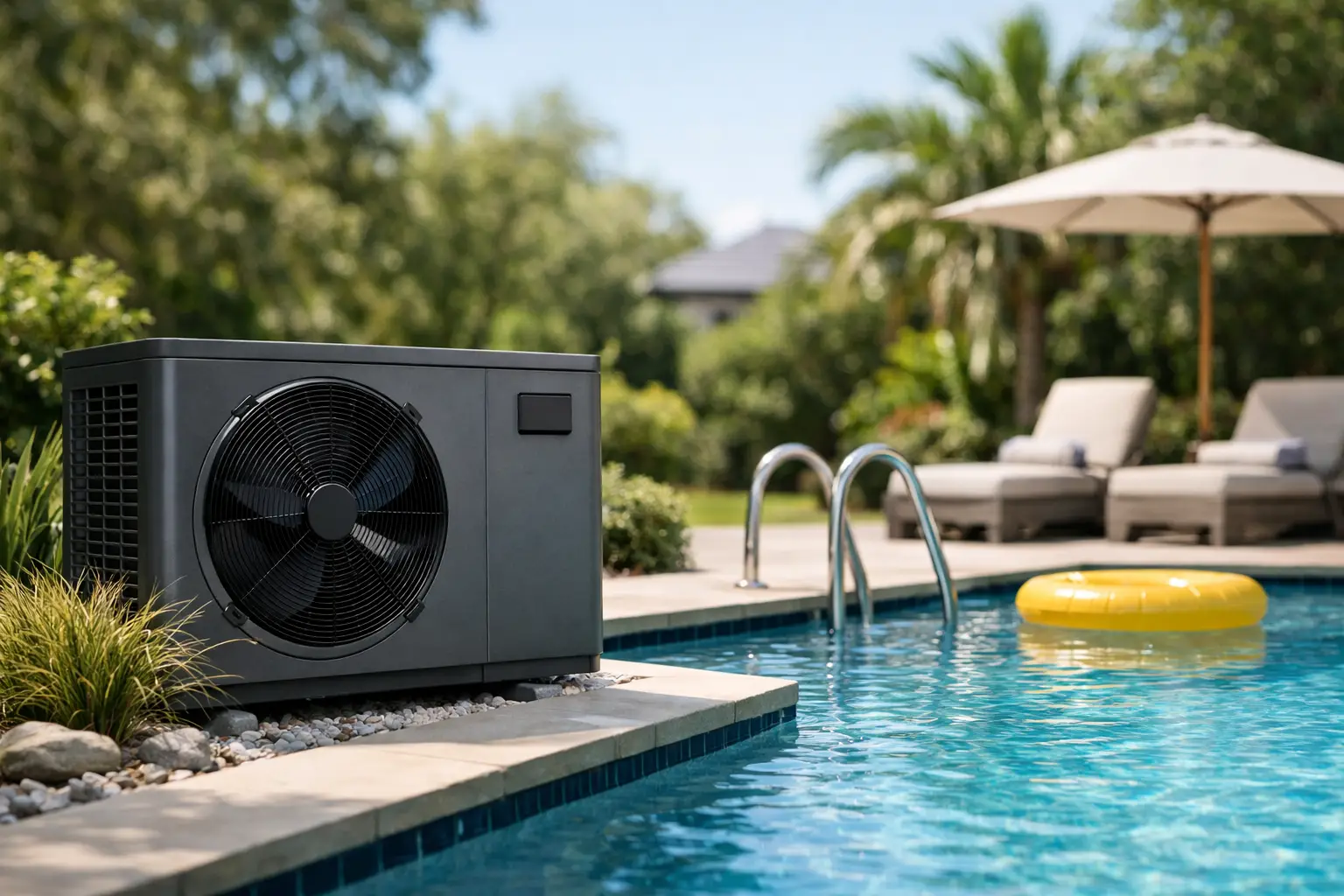
Equipment upgrades vary a lot. A variable-speed pump may be a manageable standalone improvement, while replacing the full equipment set – pump, filter, salt system, heater, controls, valves, and electrical components – can move into several thousand dollars quickly. Still, this is one of the areas where renovation can reduce operating costs over time.
Lighting upgrades are another common item. Switching older pool lights to LED improves visibility, energy use, and appearance, especially for properties used at night or rented to guests. It is rarely the biggest budget line, but it often has an outsized impact on how the pool looks once the work is complete.
Deck renovation is sometimes underestimated. If the pool shell is renewed but the surrounding deck remains cracked, uneven, or outdated, the whole area can still feel tired. Repairs, resurfacing, pavers, porcelain, or stone finishes can add substantially to the project budget, but they also change how the entire outdoor space is perceived.
Cosmetic updates vs functional renovation
This is where many budgets go off track. A cosmetic renovation improves appearance. A functional renovation improves how the pool works. Some projects need both.
If your pool looks dated but circulation is stable, leak-free, and energy use is reasonable, you may be able to focus on finishes and visual upgrades. If the pool is losing water, tripping breakers, struggling to hold chemical balance, or running with old inefficient equipment, visual work alone will not solve the problem.
The smarter approach is to prioritize in this order: safety, structural condition, hydraulic performance, equipment efficiency, then aesthetics. That may not be the most exciting way to allocate a budget, but it is the one that avoids redoing work later.
Why quotes for the same pool can vary so much
If you have received several estimates and the numbers are far apart, that does not automatically mean one contractor is overpriced. It may mean they are not pricing the same scope.
One quote may include demolition, disposal, plumbing checks, and startup balancing. Another may only include the visible finish work. One may specify a premium surface system with a longer expected life. Another may price the cheapest material available. The difference between a clear renovation plan and a vague one becomes expensive once the project starts.
A reliable estimate should explain what is included, what is excluded, what assumptions are being made, and what could trigger additional cost. That level of detail matters even more for larger properties, shared pools, and hospitality environments where downtime and repeat interventions create their own costs.
When renovation saves money instead of just spending it
Not every pool renovation is about looks. In many cases, the right upgrades reduce monthly operating expenses and lower future repair risk.
Replacing an old single-speed pump with a variable-speed model can reduce energy consumption noticeably. Updating filtration and circulation can improve water quality and reduce chemical inefficiency. Fixing leaks protects both water use and surrounding structures. Modern controls make it easier to run the pool consistently without overcorrecting chemistry or runtime.
This matters for private owners, but it matters even more for communities and hotels where recurring costs multiply over an entire season. Paying less every month is not a marketing line. It is often the reason a renovation makes financial sense.
How to budget without overcommitting
The best renovation budgets start with a technical inspection, not a mood board. Before choosing finishes, confirm the condition of the shell, plumbing, equipment, and electrical systems. A pool that looks like it needs a facelift may also be hiding circulation or leak issues that should be addressed while the area is already under construction.
It also helps to separate must-do work from optional upgrades. For example, resurfacing and line repair may be essential now, while water features, premium tile, or deck expansion can be phased later. That does not mean lowering standards. It means spending in the right sequence.
For high-value homes and guest-facing properties, it is also worth considering the cost of delay. Waiting another season with failing equipment or a deteriorated finish can make the eventual project larger and more disruptive.
What pool owners should ask before approving a renovation
Ask what problem each part of the renovation is solving. Ask how long the selected materials are expected to last under the actual usage of the pool. Ask whether the quote includes startup, balancing, and post-renovation checks. Ask what happens if hidden issues are discovered after demolition begins.
Most importantly, ask who is coordinating the full process. Renovations go more smoothly when one technical team can diagnose, execute, and follow up instead of passing responsibility between multiple vendors. That continuity tends to produce better control over timeline, accountability, and final performance.
For pool owners in areas like Marbella, Mijas Costa, and Estepona, where pools are heavily used and property standards are high, that level of coordination is often the difference between a quick patch and a renovation that actually holds up.
A good renovation should leave you with more than a nicer-looking pool. It should leave you with a system that is easier to run, safer to use, and less likely to surprise you with avoidable costs next season.