You usually notice it in the water before you notice it at the equipment pad. The pool starts looking dull, fine debris settles back to the floor, or the pressure gauge behaves oddly. If your pool filter not working issue shows up suddenly, the right response is not guesswork. A filter problem can come from the pump, the valve, airflow, a dirty filter element, or even a simple blockage, and each one calls for a different fix.
When a pool filter is not working, start with the symptoms
A filter rarely “fails” in isolation. In most cases, what looks like a bad filter is actually poor circulation somewhere in the system. That matters because replacing the wrong part wastes time and money, while the water quality continues to drop.
Start by looking at what the pool is doing. If the return jets feel weak, the issue may be low flow rather than filtration media. If the pump basket is not filling properly, you may have suction-side air entering the line. If the pressure gauge reads much higher than normal, the filter is probably loaded with debris or the return side is restricted. If the gauge reads very low, the problem may be at the skimmer, pump, impeller, or suction line.
This first check gives you direction. It also helps you avoid one of the most common mistakes: backwashing, opening, or replacing the filter when the real problem is the pump pulling air or not moving enough water.
Pool filter not working: the most common causes
Dirty or clogged filter media
This is the obvious one, but it still needs context. A cartridge filter clogged with sunscreen, oils, and fine dust will reduce circulation. A sand filter with channeling or compacted media may let dirt pass through even though the system is running. A DE filter with damaged grids can lose filtration quality while pressure behavior becomes inconsistent.
The trade-off is simple. Cleaning too late reduces performance and strains the system. Cleaning too often, especially with some cartridge elements, can shorten the life of the media if it is handled roughly or washed aggressively every week.
Air in the system
If you see bubbles in the pump lid or air coming out of the return jets, the filter may not be the real issue. Air leaks often enter through the pump lid O-ring, drain plugs, low water level, skimmer weir problems, or fittings on the suction side. Once air gets into the system, filtration becomes unstable because the pump is no longer moving a solid column of water.
This is common after basic maintenance or after a basket has been emptied and the lid is not reseated correctly. It is a small issue that can create a large drop in performance.
Multiport valve or internal valve problems
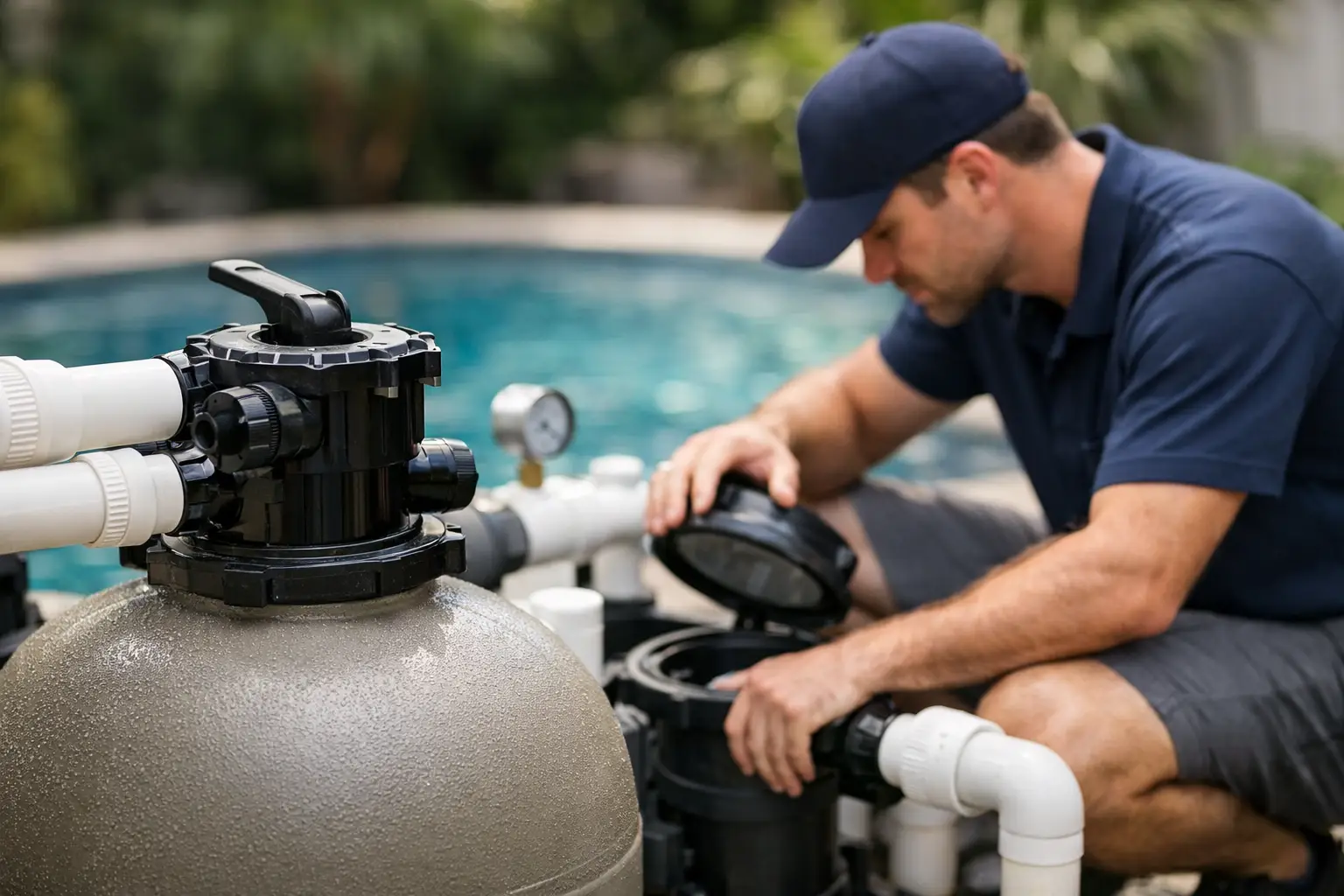
On sand and DE systems, the valve position matters more than many pool owners realize. A handle left between settings, a worn spider gasket, or internal leakage can send water to waste, reduce return flow, or allow dirty water back into the pool.
If the filter seems to run but the water never clears, the valve deserves a closer look. The same applies if water is leaking from the waste line when the system should be filtering normally.
Blocked baskets, lines, or impeller
A full skimmer basket or pump basket is an easy fix. A partially blocked impeller is less obvious and far more disruptive. Leaves, hair, small stones, or fibrous debris can reduce flow enough to make the filter appear ineffective.
There is also the possibility of a restriction in the suction or return line. That tends to show up as weak circulation, slow priming, or pressure readings that do not make sense compared to the usual operating range.
Pressure gauge giving false information
Sometimes the system is fine and the gauge is not. A stuck or failed pressure gauge can send you in the wrong direction, especially if you are using it as your only reference for cleaning cycles.
If the gauge does not return to zero when the system is off, or if it never changes regardless of conditions, do not trust it for diagnosis.
What to check first before calling for service
Begin with the safest and fastest checks. Turn off the system before opening anything. Confirm the pool water level is high enough for the skimmer to pull properly. Empty the skimmer basket and the pump basket. Then inspect the pump lid and O-ring for dirt, flattening, or a poor seal.
Next, check whether the pump is priming fully. A properly primed pump basket should fill with water quickly and run with limited visible air. If it struggles to fill, loses prime, or fills and empties in cycles, that usually points to suction-side air or a flow restriction before the pump.
Look at the pressure gauge, but treat it as one clue rather than the whole answer. Compare the current reading with the normal clean-filter pressure for your pool. If you do not know that baseline, it is worth recording it after the next proper service.
For cartridge filters, inspect the element if flow is clearly reduced and you have ruled out a priming issue. For sand or DE filters, review the valve position and look for signs of internal bypass or leakage. If backwashing is needed, follow the correct sequence for your equipment. Rushing this step or moving the valve with the pump on can create a larger repair.
Signs the problem is no longer a DIY check
Some filter issues are simple. Others are symptoms of a broader equipment problem. If the motor is humming but not starting, if the breaker is tripping, if the filter tank is leaking, or if the system loses pressure immediately after cleaning, it is time for a proper diagnosis.
The same applies when the water turns cloudy again within a day or two despite chemical correction. That often means circulation and filtration are not working together as they should. Chemical treatment alone will not compensate for poor mechanical performance.
For larger homes, communities, and hospitality properties, waiting is expensive. Poor filtration affects swimmer safety, increases chemical demand, and can lead to algae recovery work that costs more than the original repair. In high-use pools, response time matters because guest experience and property standards are on the line.
Why the same symptom can mean different repairs
Weak return flow is a good example. In one pool, it may mean a dirty cartridge. In another, it may be a blocked impeller. In a third, it may be a suction leak caused by a worn lid gasket. The symptom is the same, but the repair is completely different.
That is why a clear diagnosis saves money. Replacing filter media when the pump is starved for water will not solve the issue. Cleaning a spotless cartridge will not fix a damaged valve gasket. And continuing to run the system while the pump is cavitating can shorten equipment life.
A good technician looks at the whole hydraulic circuit, not just the filter body. That includes flow, pressure, air, valve settings, seals, and how the pool has been behaving over time.
Preventing the next filter failure
Most filtration problems build gradually. The best prevention is not a single deep clean once a season. It is a structured maintenance routine that tracks pressure, flow, water clarity, basket condition, and cleaning intervals.
For residential pools, that means servicing the filter on schedule, not only when the water looks bad. For communities and hotels, it also means adapting the maintenance frequency to swimmer load, nearby landscaping, weather, and fine dust exposure. A pool near the coast or in a windy area may need more frequent checks because debris load changes faster than expected.
It also helps to keep records. Clean-filter pressure, cleaning dates, valve behavior, and recurring air leaks tell a story. Over time, those details make troubleshooting faster and more accurate.
Infinity Brand works with this approach because it reduces repeat issues and gives owners more control over operating costs. The goal is not just to get the system running again, but to keep it stable through regular use, seasonal changes, and heavier demand.
When fast repair protects more than water quality
A pool filter problem is not just a water problem. It affects pump strain, chemical efficiency, surface cleanliness, swimmer confidence, and the overall condition of the installation. For villas, rental properties, and shared pools, that can quickly become a service issue, a reputation issue, or a cost issue.
If your filter is underperforming, the smart move is to catch the cause early and fix the right component the first time. Clear water usually starts with clear diagnosis, and that is what keeps a small equipment issue from turning into a bigger one next week.