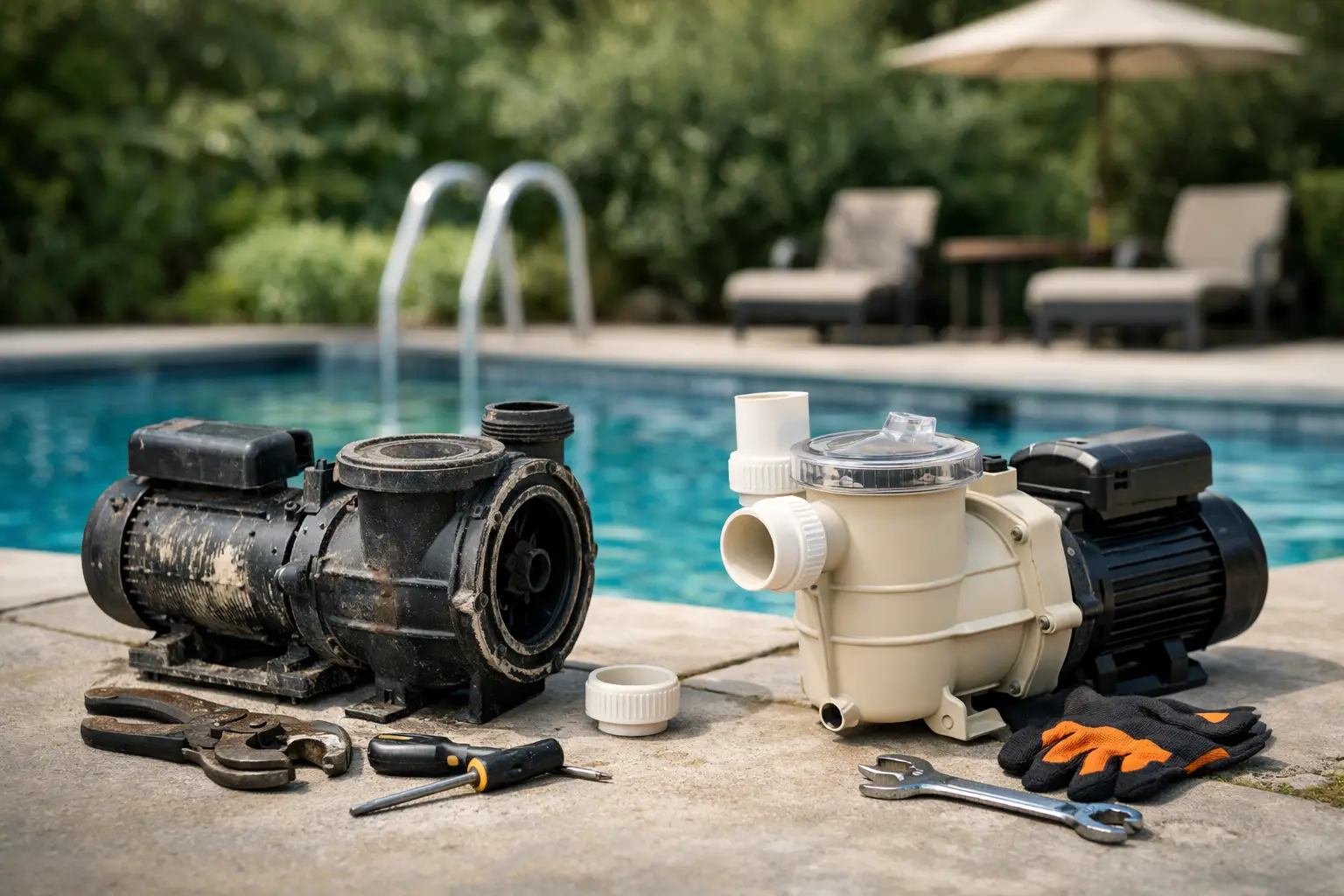
When a pool pump starts humming louder than usual, loses pressure, or trips the breaker, the problem rarely stays small for long. A timely pool pump repair service can prevent water quality issues, protect the filtration system, and keep operating costs from climbing while the pool sits half-functional.
What a pool pump repair service should actually solve
A pump problem is not just a noisy motor. It affects circulation, chemical distribution, skimmer performance, filter pressure, and, in many cases, the overall safety of the water. That is why the right service starts with diagnosis, not guesswork.
In residential pools, the issue may show up as weak return jets, air bubbles in the pump basket, or a system that struggles to keep the water clear. In communities and hotels, the stakes are higher. Reduced circulation can quickly turn into guest complaints, regulatory concerns, and avoidable downtime.
A proper intervention should identify whether the fault is electrical, hydraulic, mechanical, or a combination of all three. Replacing parts without confirming the root cause often leads to repeat failures and higher long-term cost.
Common signs your pool pump needs attention
Some failures are obvious. The pump will not start, shuts off after a few minutes, or leaks visibly onto the equipment pad. Others are easier to miss until performance drops.
If the pump is making a grinding or screeching sound, worn bearings are a common cause. If it runs but does not move water effectively, the issue may be a clogged impeller, suction-side air leak, blocked line, or failing capacitor. A pump that keeps losing prime may point to a cracked lid gasket, valve problem, or low water level, but it can also signal a more complex suction leak.
Overheating is another red flag. Motors can run hot because of age, poor ventilation, voltage issues, or internal wear. In some cases, the pump itself is not undersized or defective – the system is simply working against a dirty filter, restricted plumbing, or incorrect programming.
That is where experience matters. The symptom you see is not always the part that has failed.
Repair or replacement? It depends on three factors
The most practical question is not whether a pump can be repaired. Most can, at least in part. The better question is whether repair makes financial and operational sense.
The first factor is the age of the equipment. If the pump is relatively recent and the issue is limited to a seal, capacitor, lid, basket, or connection problem, repair is usually the smarter route. If the motor is older and multiple components are already showing wear, investing in piecemeal fixes may only delay a full replacement.
The second factor is efficiency. Older single-speed pumps often consume far more electricity than modern variable-speed models. If energy bills are high and the pump is nearing the end of its service life, replacement can reduce ongoing costs enough to justify the investment.
The third factor is reliability. For a private home, an extra day or two of reduced circulation may be inconvenient. For a community pool or hospitality property, repeat breakdowns create a service issue. In those settings, the decision often leans toward the option that minimizes future interruption, not just the lowest immediate invoice.
The most frequent pump failures and what they mean
Mechanical seal leaks
A leaking mechanical seal is one of the most common pump problems. Water begins to escape where the motor connects to the wet end of the pump. Left unresolved, that moisture can damage the motor bearings and shorten the life of the entire unit.
Seal replacement is often a cost-effective repair if caught early. If it is ignored and the motor has already been compromised, the repair becomes more expensive and less predictable.
Bearing noise
A pump that sounds rough, metallic, or unusually loud may have worn bearings. This usually happens over time, often after prolonged exposure to heat or water intrusion from a failed seal.
In some cases, bearing replacement is possible. In others, especially with older motors, replacing the motor or complete pump is the more stable option.
Capacitor or electrical faults
If the pump hums but does not start, trips protection devices, or starts intermittently, the fault may be electrical. Capacitors, wiring connections, switches, and voltage irregularities all need to be checked before any part is changed.
Electrical issues are one area where rushed diagnosis causes the most wasted cost. Replacing a motor when the real problem is unstable supply or a failing control component solves nothing.
Clogged or damaged impeller
The impeller is responsible for moving water through the system. Debris, scale buildup, or internal damage can reduce flow without fully stopping the pump. The result is weak circulation, poor skimming, and pressure imbalance.
This type of problem can often be repaired, but it is also a sign that the system needs a broader inspection. Debris inside the pump may point to damaged baskets, poor maintenance, or suction issues elsewhere in the line.
Why diagnosis matters more than speed alone
Fast response is important, especially in warm-weather markets where pools run hard for much of the year. But speed without a method usually leads to callbacks.
A reliable pool pump repair service should check the full operating context. That includes pump condition, motor performance, pressure readings, valve positions, filter status, suction integrity, and electrical supply. If needed, it should also assess whether the pump is correctly matched to the pool’s size and hydraulic demand.
This is especially relevant in properties that have been renovated over time. A pool may have added heating, water features, upgraded filtration, or automation without a corresponding pump upgrade. What looks like a pump failure may partly be a system design mismatch.
What owners and property managers should expect from the service
Clear service starts with a simple question: what is failing, why is it failing, and what are the options? That sounds basic, but many repair visits stop at the first visible fault.
A good technician should explain whether the issue is isolated or part of a pattern. For example, replacing a seal is straightforward. Explaining that the seal failed because the pump ran dry, overheated, or has alignment issues is what helps prevent the same problem from returning.
You should also expect a realistic recommendation, not an automatic push toward replacement. Sometimes the right answer is a targeted repair. Sometimes it is a pump upgrade that improves reliability and lowers energy use. The value is in understanding the trade-off before approving the work.
For villas, communities, and hotels, documentation also matters. A clear breakdown of findings, proposed work, and expected outcome makes budgeting easier and reduces friction when multiple stakeholders are involved.
How to avoid repeat pump problems
Most pump failures do not happen in isolation. They build from small operating issues that go uncorrected.
Regular maintenance helps, but only when it goes beyond surface cleaning. Basket cleaning, filter monitoring, seal inspection, leak checks, programming review, and performance observation all play a role. A pump that is forced to run against dirty filters, blocked suction, or poor water levels will wear out faster no matter how good the brand is.
Seasonal properties need even closer attention. Homes that sit empty for periods can develop unnoticed leaks, power interruptions, or priming problems. By the time the owner returns, the pump may have been operating under strain for days.
In high-use environments, preventive checks are even more valuable. Commercial-style wear patterns show up faster, and a small issue can affect both water quality and the user experience almost immediately.
When local response makes a real difference
In coastal areas such as Marbella, Mijas Costa, and Estepona, pumps often work in long hot seasons with heavy usage cycles. Fast local response matters because circulation issues escalate quickly in warm conditions, particularly in occupied homes, shared pools, and hospitality settings.
That is one reason clients often prefer a provider that can diagnose, repair, maintain, and replace equipment under one service structure instead of treating each visit as a separate event. Infinity Brand works this way because it reduces delays, keeps records consistent, and makes future decisions easier when a repair today turns into an upgrade discussion later.
The real cost of waiting
Many owners delay pump repair because the system is still partly running. Water is moving, the pool looks acceptable, and the problem does not feel urgent. That is often the most expensive stage to ignore.
A pump that runs inefficiently adds pressure to the rest of the system. Filters clog faster, sanitation becomes less stable, energy use rises, and motor damage progresses. What could have been a manageable repair turns into a full equipment replacement with more downtime.
If your pump is noisier, weaker, hotter, or less reliable than it should be, the best next step is not to wait for total failure. It is to get a clear diagnosis and make the decision while you still have options.