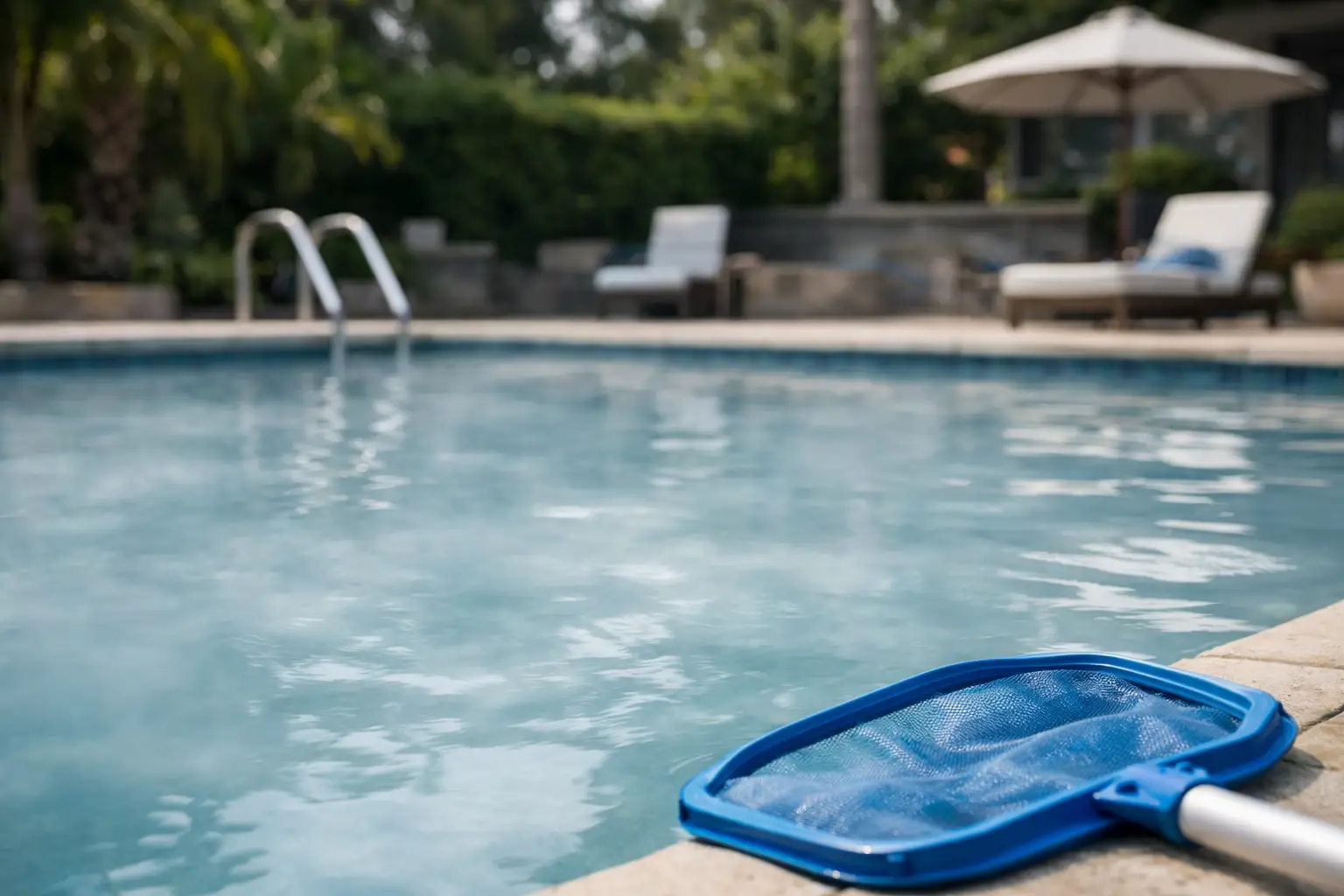
You look at the pool and the water has lost that clean, transparent finish. Maybe it looks dull, maybe milky, maybe you can still see the floor but not sharply. If you are asking why is my pool water cloudy, the short answer is this: something is out of balance in the water, the filtration system, or both. The right fix depends on what changed, how quickly it happened, and whether the cloudiness is chemical, organic, or mechanical.
Cloudy water is not just a cosmetic issue. It usually means sanitizer is underperforming, fine particles are staying suspended, or the circulation system is not removing what it should. In residential pools, that often starts as a maintenance issue. In community or hotel pools, it can become a safety and compliance problem very quickly.
Why is my pool water cloudy? Start with the pattern
The fastest way to narrow down the cause is to look at when the cloudiness appeared. If the water turned cloudy after heavy use, rain, or a heat wave, the problem is often a sanitizer demand spike combined with filtration stress. If it happened after adding chemicals, the issue may be dosing, water balance, or poor product compatibility.
If the pool has been slowly getting dull over several days, that usually points to inadequate filtration, rising total dissolved solids, early algae activity, or scale beginning to form. Sudden cloudiness and gradual cloudiness do not get diagnosed the same way, and treating them as if they do often wastes time and chemicals.
The most common causes of cloudy pool water
In practice, cloudy pool water usually comes from one of five sources: poor filtration, low free chlorine, unbalanced pH and alkalinity, fine debris after weather or bather load, or the early stages of algae. Sometimes two or three are happening at once.
1. Filtration is running, but not effectively
A pool can have a pump that turns on every day and still filter badly. Dirty filter media, a clogged cartridge, a sand filter that needs backwashing, or low flow caused by a partially blocked basket can all leave fine particles suspended in the water.
This is one of the most common situations we see in pools that look «almost clean» but never fully recover. The water is not green, and chemistry may be close, but the system is not physically removing the particles. If pressure is high, return flow is weak, or the pump is losing prime, filtration needs to be checked before adding more products.
2. Sanitizer levels are too low for the actual demand
Clear water depends on enough active sanitizer to oxidize contaminants and prevent biological growth. If free chlorine is low, or if stabilizer levels are too high and chlorine becomes less effective, the water can turn cloudy before it turns visibly green.
That is why test strips can be misleading if used alone. They may show some chlorine present, but not whether the water has enough active sanitizer for current conditions. Warm weather, sunscreen, body oils, leaves, and high swimmer load all increase demand. A pool that was balanced three days ago may not be balanced now.
3. pH and alkalinity are off
High pH reduces chlorine efficiency and can also encourage calcium to precipitate, which makes water look hazy or milky. Low pH can create its own problems, including equipment stress and unstable water chemistry. Total alkalinity affects how stable that pH remains.
This is where cloudy water often gets overtreated. Someone adds shock, then clarifier, then algaecide, but the real issue is that pH is too high and the sanitizer cannot work properly. Without correcting balance first, the water may improve briefly and then cloud up again.
4. Calcium hardness is too high
If your fill water is hard, or if evaporation is high and the pool is topped off frequently, calcium levels can rise over time. That can lead to cloudy water and scale formation, especially when pH also runs high.
This matters in sunny coastal areas where evaporation is constant for long stretches. The water may not look dirty in the usual sense. It can look pale, flat, or slightly white. In those cases, the problem is mineral saturation rather than debris.
5. Early algae or organic contamination
Algae does not always begin as green water. At the start, you may only notice a soft cloudiness, slippery walls, or a slight loss of sparkle. If circulation is weak in corners, steps, or dead zones, algae can begin there first.
Organic contamination from pollen, dust, and landscaping debris can produce a similar effect. The difference is that algae tends to return quickly if sanitizer is not corrected, while dust and pollen usually clear once filtration and cleaning catch up.
What to check first when pool water turns cloudy
Start with a full water test, not just chlorine. You want to know free chlorine, combined chlorine, pH, total alkalinity, calcium hardness, and stabilizer if chlorine performance seems weak. If the pool has salt chlorination, check salt level and cell condition too.
Then inspect the circulation side. Check skimmer baskets, pump basket, return flow, filter pressure, and timer settings. A pool can test reasonably well and still stay cloudy if water is not moving enough hours each day or passing through the filter properly.
Finally, look at the pool surfaces. If walls feel slick or steps have visible residue, the issue may include algae or biofilm. If the water looks more white than dull, scaling or calcium precipitation becomes more likely.
How to clear cloudy pool water without guessing
The right order matters. First balance the water, especially pH and sanitizer. If pH is high, lower it into the proper range before shocking or adding specialty products. If free chlorine is low, raise it based on pool volume and current reading.
Next, make sure the filter is ready to do the work. Clean or backwash it as needed, and run the system long enough to actually turn the water over. In many cloudy-water cases, the pool simply needs longer circulation after correction. Shutting the system off too early leaves the suspended particles in place.
Brush the walls and floor, then vacuum carefully. Brushing lifts fine contaminants into suspension so the filter can remove them. If there is visible settling on the floor, vacuuming to waste may be the better option when the system allows it.
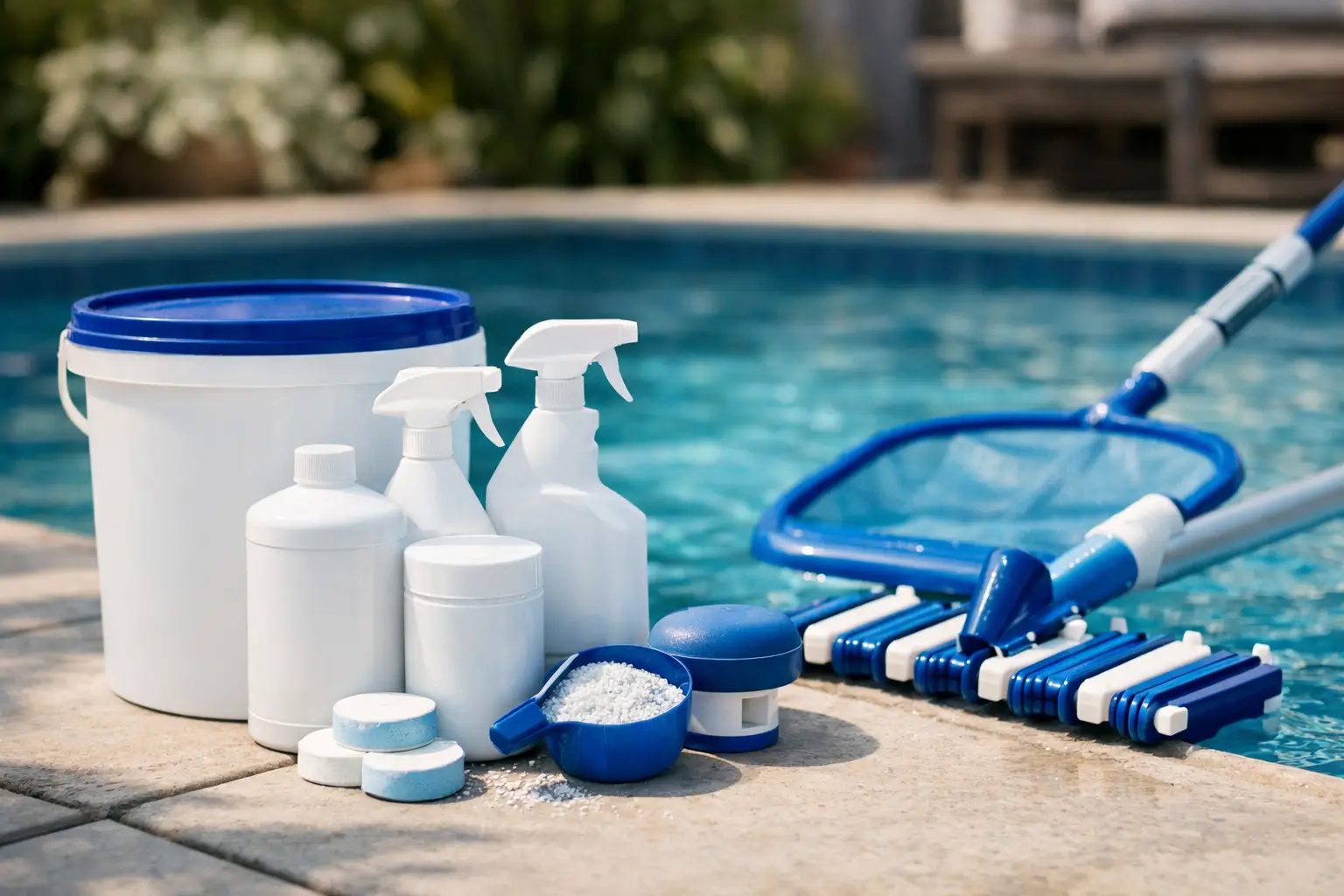
Clarifier can help in some cases, but it is not a universal fix. Used correctly, it helps small particles combine so the filter can catch them. Used in the wrong amount or with the wrong water balance, it can make cleanup slower. Flocculant is even more situational and usually best reserved for severe cloudiness when immediate settling is needed and vacuuming to waste is possible.
When cloudy water points to a technical problem
Sometimes chemistry is only part of the story. A worn filter valve, damaged laterals in a sand filter, a failing pump capacitor, suction leaks, poor hydraulic design, or undersized equipment can all cause recurring cloudiness.
This is why repeat problems matter more than one isolated episode. If the pool turns cloudy every week, after every busy weekend, or after every backwash cycle, there may be a system issue behind it. In those cases, adding chemicals each time treats the symptom, not the cause.
For larger villas, communities, and hospitality settings, that distinction is critical. Recurrent cloudiness affects operating costs, guest perception, and the lifespan of equipment because the system is constantly being pushed to recover rather than maintained in a stable range.
Why DIY fixes sometimes make it worse
Most failed attempts come from stacking products too quickly. Shock, clarifier, algaecide, calcium increaser, pH reducer, and phosphate remover all in the same day is not a recovery plan. It is a good way to create competing reactions and lose track of the real cause.
The other issue is underestimating time. Even when the correction is right, the filter still needs hours to clear the water. Owners often assume the treatment failed and add more chemicals before the first adjustment has had time to work.
A more reliable approach is simple: test accurately, correct the primary imbalance, verify filtration, and reassess after circulation. That is slower than guessing, but usually faster than repeating the same problem for a week.
When to call for professional help
If the water is cloudy and chlorine will not hold, if pressure and flow seem inconsistent, if cloudiness returns soon after treatment, or if the pool has visible scale, algae, or equipment alarms, it is time for a proper diagnosis. Commercial and community pools should also be assessed quickly because water clarity is a safety issue, not just a maintenance detail.
A technical service team can identify whether the problem is chemical demand, filtration inefficiency, hydraulic loss, scaling, or a failing component. That saves money because the treatment plan matches the actual fault. For pool owners in Marbella, Mijas Costa, or Estepona, this is especially useful during peak season when warm temperatures and heavy use reduce the margin for error.
At Infinity Brand, the focus is not just getting cloudy water to look better by tomorrow. It is restoring stable water conditions and making sure the pool can stay clear with a maintenance routine that fits the installation, usage, and equipment.
Clear water usually comes back faster than people expect once the real cause is identified. The key is not doing more. It is doing the right things in the right order.