A pool that needs topping off every few days is rarely just “using more water than usual.” In many cases, that is the first sign you need a swimming pool leak detection service, especially if the water loss is paired with rising utility bills, damp soil, unstable chemical levels, or air getting into the pump system. The longer a leak goes unchecked, the more expensive it usually becomes – not only in water loss, but in structural wear, equipment strain, and avoidable repairs.
For homeowners, communities, and hospitality properties, the real issue is not only finding out whether a pool leaks. It is finding where the leak is, how serious it is, and what should happen next. A proper diagnosis saves time, reduces unnecessary excavation, and gives you a clear path to repair instead of guesswork.
What a swimming pool leak detection service actually does
A swimming pool leak detection service is a technical inspection process designed to locate water loss at its source. That source may be in the shell, plumbing lines, fittings, skimmers, main drains, return inlets, lights, expansion joints, or nearby equipment.
This matters because not every leak behaves the same way. A crack in the vessel can show up differently than a pressure-side plumbing leak. A failing shaft seal at the pump creates a different pattern than a broken underground suction line. If the diagnosis is too broad, the repair plan usually becomes too expensive.
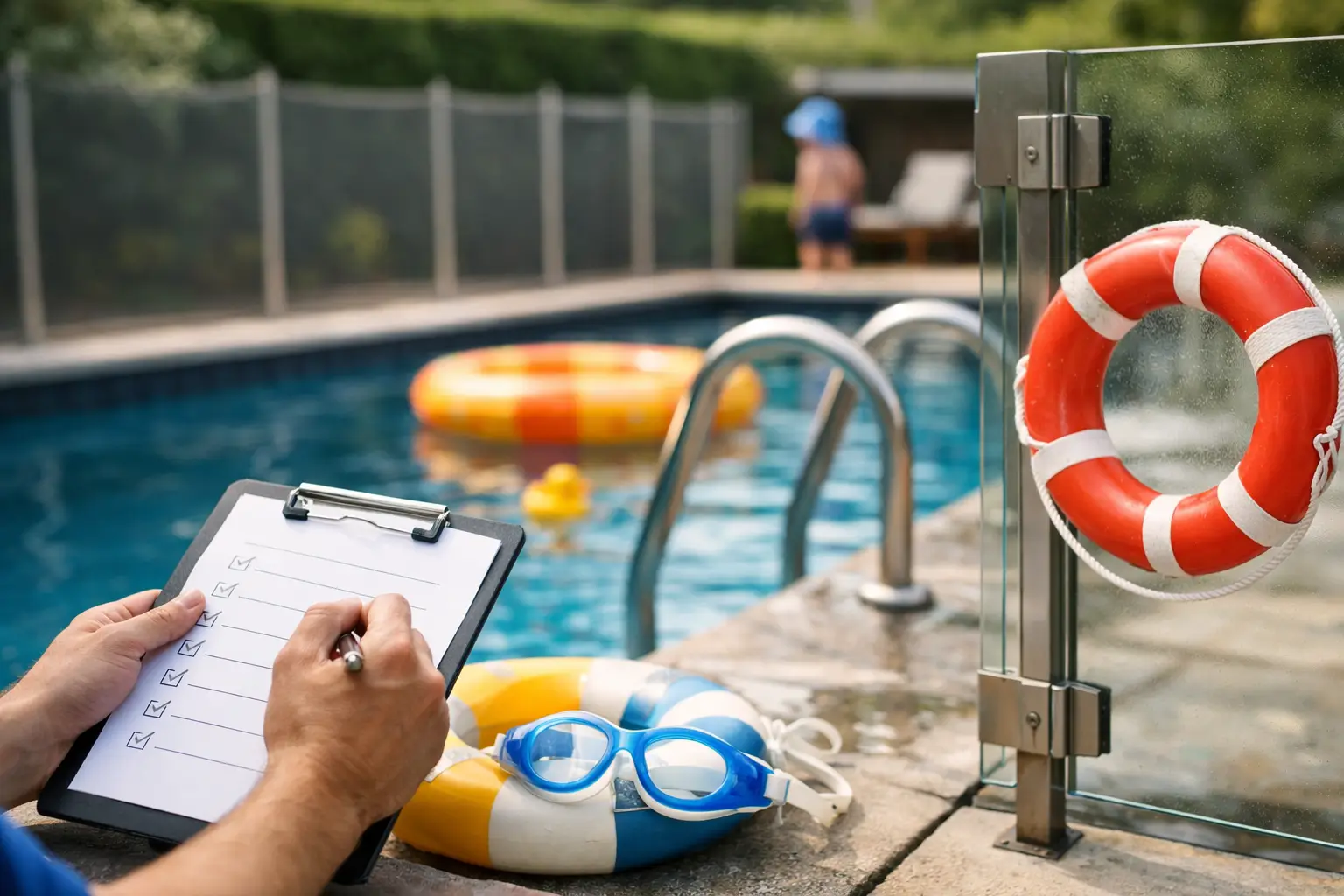
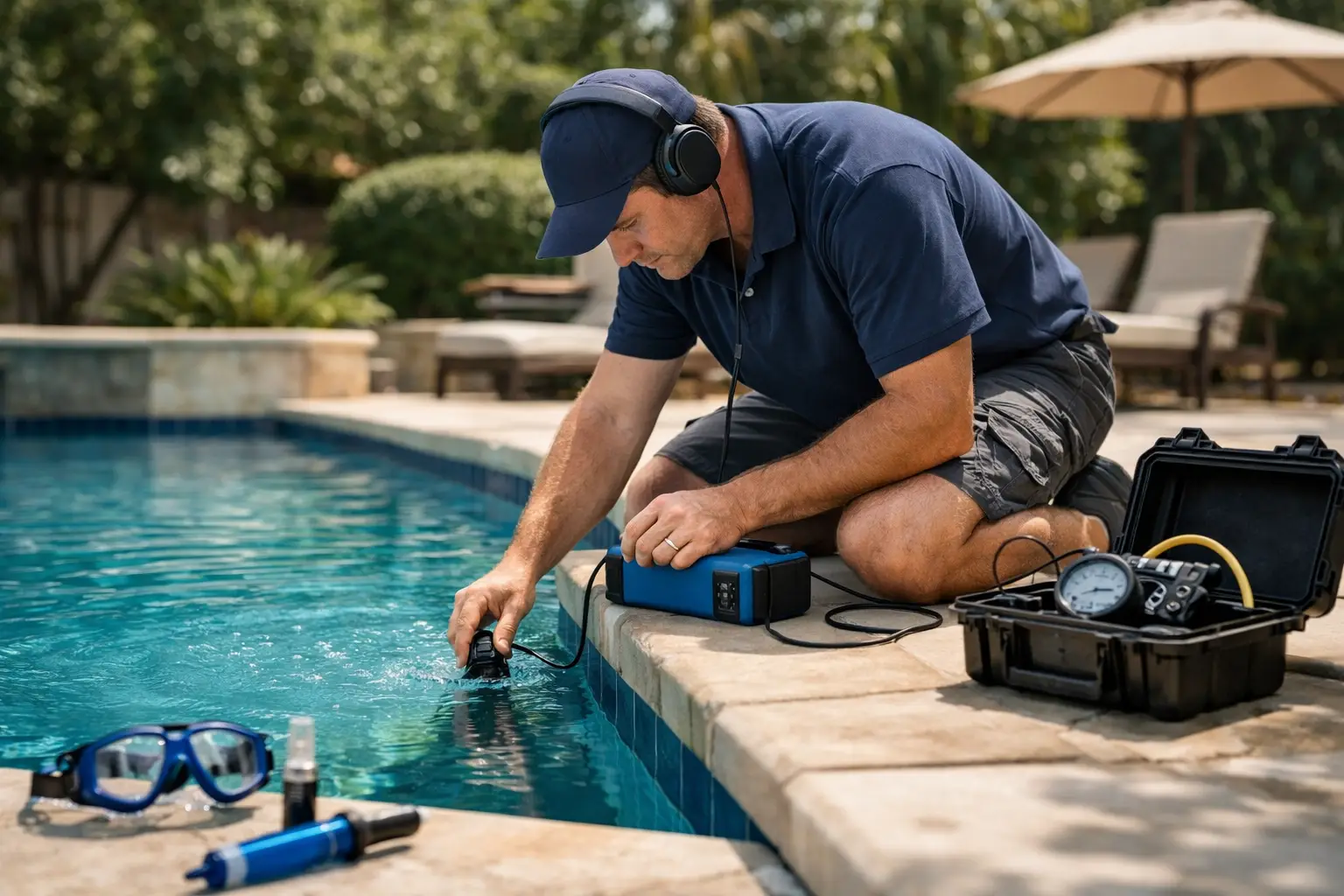
A qualified technician starts by separating normal evaporation from abnormal water loss. From there, the process may include visual inspection, bucket testing, pressure testing, dye testing, listening equipment, and line isolation. The goal is simple: identify the leak with enough precision that repairs can be targeted and justified.
The signs you should not ignore
Some leaks are obvious, but many start quietly. Pool owners often notice the symptoms before they understand the cause.
If the water level keeps dropping below the skimmer, if you are adding water more often than before, or if the deck or ground around the pool stays damp, those are strong warning signs. Stains, loose tiles, cracking around fittings, algae returning too quickly, or chemicals drifting out of balance can also point to a leak.
On the equipment side, air in the pump basket, loss of prime, or pressure changes in the filtration system may suggest a plumbing issue. For hotels or high-use residential pools, even a small leak can turn into a bigger operational problem because water loss affects circulation, heating efficiency, chemical consumption, and guest experience.
It also depends on the season and the environment. In hot, windy areas, some evaporation is expected. But if the rate of loss exceeds what weather conditions can explain, testing is the right next step.
Where pool leaks usually happen
Leaks are not limited to visible cracks. In practice, the most common failure points are often the transition areas where materials, fittings, and movement meet.
Structural leaks
These can appear in the pool shell, finish, expansion joints, or around penetrations such as lights and returns. Small fissures may not look dramatic, but they can allow continuous water loss and gradually affect surrounding materials.
Plumbing leaks
Underground plumbing leaks are especially disruptive when diagnosed poorly. Suction lines, return lines, cleaner lines, and hydrostatic components can all fail over time due to age, settlement, vibration, or previous repair work.
Equipment-related leaks
Not every leak is underground. Pumps, filters, valves, heaters, and chlorination systems can all leak at unions, seals, housings, or connections. These leaks are sometimes easier to fix, but they still need proper confirmation before parts are replaced.
How the detection process works
A reliable swimming pool leak detection service should feel methodical, not improvised. Good diagnostics follow a sequence so that each finding narrows the problem instead of adding confusion.
The first step is usually information gathering. The technician reviews the pool type, recent water loss, repair history, equipment behavior, and whether the leak changes when the pool is running or turned off. That last point is useful because it can help distinguish structural loss from plumbing loss.
After that, visual inspection focuses on likely failure points. Waterline tile, skimmers, returns, light niches, joints, and equipment pads often provide the first clues. If the leak is not obvious, isolation testing begins.
Pressure testing is commonly used to evaluate plumbing lines. By isolating specific circuits and measuring pressure stability, technicians can tell whether a line is holding or losing pressure. Dye testing helps confirm localized leaks around fittings or cracks by showing how water is being drawn through a defect.
In some cases, acoustic tools help detect underground leaks without opening large sections of deck. This is where experience matters. The tools are useful, but interpretation is what makes the result reliable.
Why professional detection saves money
Many pool owners delay testing because they want to avoid the cost of inspection. In reality, the bigger expense is often acting without a precise diagnosis.
Replacing parts “just in case,” breaking deck surfaces without confirmation, or assuming water loss is only evaporation usually increases the final bill. A targeted inspection reduces unnecessary labor and limits the repair area.
There is also a broader cost picture. Ongoing leaks can undermine soil, affect surrounding paving, increase water and chemical consumption, overload equipment, and shorten the service life of finishes and mechanical components. For communities and hospitality properties, unresolved leaks can also create liability and scheduling issues if repairs become urgent during peak use.
The best service is not the one that starts digging fastest. It is the one that identifies the problem clearly enough that the repair scope makes sense.
What to expect from a good service provider
Not all leak detection visits offer the same value. Some providers only confirm that a leak exists. Others go further and explain the source, the severity, the repair options, and the likely next step.
That difference matters. A useful service should give you more than a vague recommendation. You should expect a structured assessment, clear communication, and a practical explanation of what was tested and what the findings mean.
For residential owners, that means knowing whether the issue is urgent and what level of repair is reasonable. For property managers and hotels, it also means understanding how the repair may affect operations, safety, and downtime.
When the same company can diagnose, repair, and continue maintaining the pool, coordination tends to be easier. There is less back-and-forth, fewer assumptions between contractors, and better continuity once the immediate issue is resolved. That operational control is one reason many clients prefer a full-service provider rather than a one-off inspection team.
When timing matters most
A leak is always worth checking, but some situations should move to the front of the line.
If water loss becomes sudden, if the pool drops to a consistent level and stops, or if the ground near the pool begins to shift or soften, waiting rarely helps. The same applies if equipment starts drawing air, if balancing the water becomes unusually difficult, or if a leak is suspected in a high-value property where finish damage can escalate quickly.
In markets with year-round pool use, fast action is even more important. Properties in areas such as Marbella, Mijas Costa, or Estepona often rely on continuous pool availability, whether for private use, rentals, or hospitality operations. Delays can affect both the asset and the user experience.
Repair comes after diagnosis, not before
Once the leak is located, the repair strategy depends on the type of failure, the pool construction, and the access required. Some issues can be fixed with localized sealing or fitting replacement. Others require plumbing repair, resurfacing work, or controlled deck access.
This is where transparency matters. The right repair is not always the smallest one, and it is not always the biggest one either. If a line has multiple weak points, patching one section may only delay a larger intervention. On the other hand, if the leak is isolated to a single fitting or seal, a limited repair may be entirely appropriate.
A good technical team explains those trade-offs clearly so the client can make an informed decision based on risk, cost, and long-term performance.
Infinity Brand approaches leak detection with that practical mindset: diagnose first, define the real cause, and only then move to the repair that fits the pool and the property.
If your pool is losing water and the cause is not clear, the smartest next step is not to keep refilling it. It is to get a precise diagnosis while the issue is still manageable.