Cloudy water at 9 a.m., a stained waterline by noon, and a clogged basket by evening usually point to the same issue: the wrong maintenance products, the wrong dosage, or both. Professional pool cleaning products are not just stronger versions of retail chemicals. They are part of a controlled maintenance system designed to keep water balanced, equipment protected, and cleaning results consistent.
For homeowners, communities, and hotels, that distinction matters. A pool is not only a visual feature. It is a working system with chemistry, circulation, filtration, and surface care all affecting each other. When one part is handled poorly, the result is rarely limited to appearance. You start seeing scale, algae pressure, premature equipment wear, guest complaints, or avoidable operating costs.
What makes professional pool cleaning products different
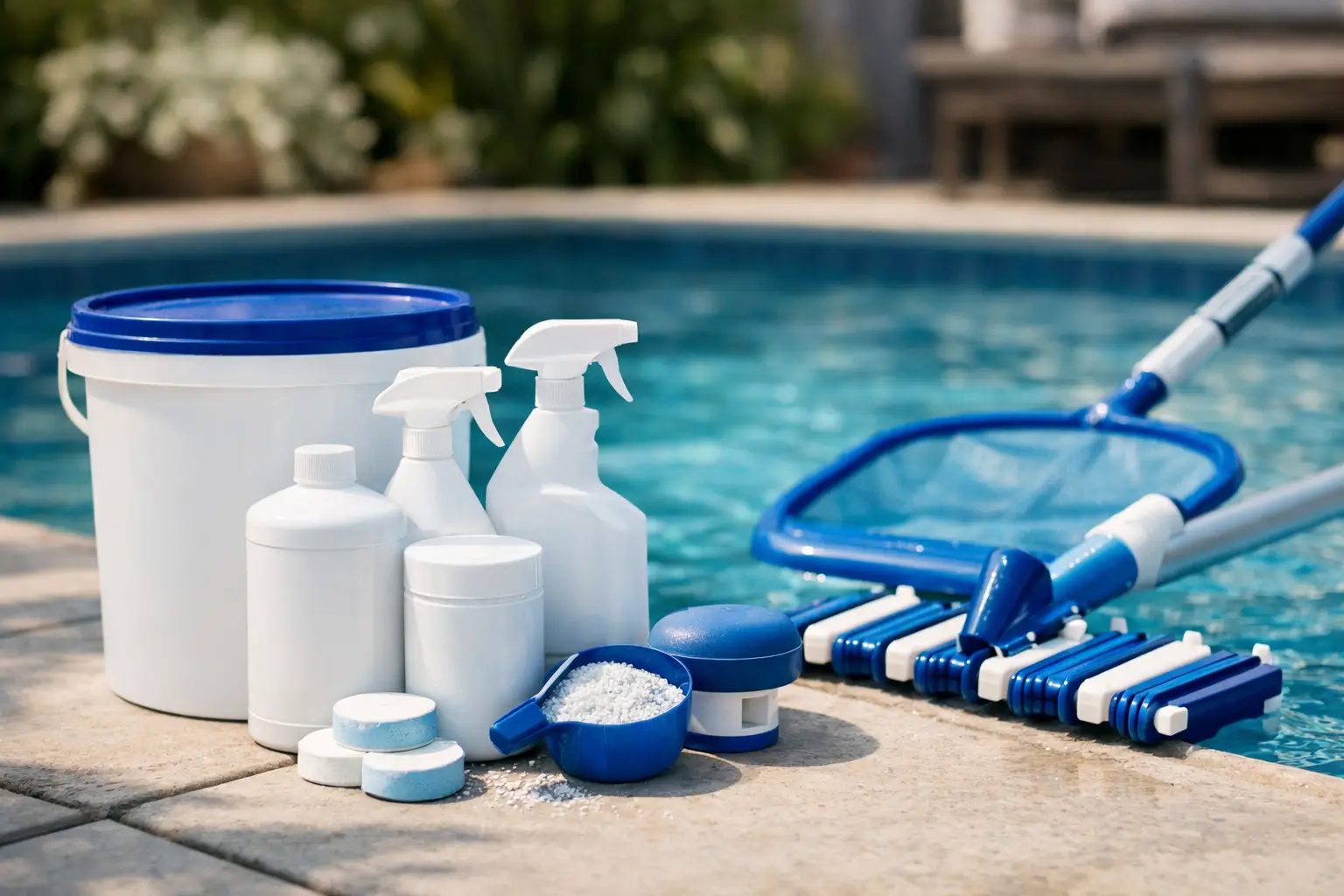
The main difference is not marketing. It is reliability. Professional-grade products are chosen for predictable performance, compatibility with specific pool systems, and dosing accuracy over time. That includes sanitizers, pH control products, flocculants, algaecides, descalers, tile cleaners, filter cleaners, and specialty treatments for metals, phosphates, or organic contamination.
In practice, a professional approach means using products based on test results and pool conditions, not guesswork. A residential pool used on weekends does not need the same treatment plan as a vacation villa with heavy seasonal use or a hotel pool with daily bather loads. Even pools that look similar on the surface can require very different maintenance products depending on water source, sun exposure, finish, and equipment setup.
This is why cheap, one-size-fits-all solutions often create hidden costs. A product may appear to solve one issue quickly while pushing another parameter out of range. For example, an aggressive shock treatment can clear cloudy water but leave chlorine levels unstable, increase pH drift, or accelerate wear on surfaces if it is used without checking overall balance.
Professional pool cleaning products by task
The easiest way to understand product selection is by function. Each product category supports a specific maintenance objective, and good results depend on using the right one at the right time.
Water sanitation and oxidation
Sanitizers keep the water safe by controlling bacteria and organic contamination. Chlorine remains the most common option because it is effective and measurable, but the format matters. Tablets, granules, and liquid chlorine each behave differently in storage, dosing, and water balance.
Oxidizers support sanitation by breaking down waste that chlorine alone struggles to manage efficiently. This is especially relevant in pools with high use, sunscreen residue, leaves, or heat exposure. The trade-off is that oxidation products must be selected carefully to avoid overstressing the water or creating unnecessary chemical swings.
pH, alkalinity, and calcium control
Balanced chemistry is where many problems are either prevented or created. Products that raise or lower pH, adjust total alkalinity, or manage calcium hardness are not optional extras. They protect swimmer comfort, sanitizer efficiency, and the condition of the pool shell, grout, and equipment.
If pH is too high, chlorine loses efficiency and scaling becomes more likely. If it is too low, surfaces and components may corrode. Professional maintenance avoids treating these values in isolation. The numbers influence each other, so the right product choice depends on the full water profile.
Algae prevention and treatment
Not every green or slippery pool needs the same algaecide, and not every algaecide is meant for active outbreaks. Some are preventive, used in controlled doses to support ongoing maintenance. Others are corrective and should only be used when test data and visual inspection confirm the need.
Using too much algaecide can be just as unhelpful as using too little. It may increase foaming, affect water clarity, or add cost without fixing the root cause, which is often poor circulation, poor sanitation, or dead spots in the pool.
Surface and waterline cleaning
Tiles, liners, stone surrounds, and waterlines need products suited to the material and the type of buildup. Grease, sunscreen residue, calcium scale, and metal staining do not respond the same way. A harsh acid-based cleaner may remove deposits quickly but can damage finishes if it is used routinely or on the wrong surface.
This is where professional products and methods protect the asset. The aim is not just to make the pool look clean today. It is to keep surfaces in good condition over seasons of use.
Filter and equipment cleaning
A pool can have balanced chemistry and still perform poorly if the filter is dirty or the circulation system is restricted. Filter cleaners, descaling products, and line-cleaning solutions help restore efficiency and extend component life.
Again, product choice depends on the equipment. Cartridge, sand, and DE filters each require different handling. Using the wrong cleaner can reduce filter performance or shorten replacement cycles.
How to choose the right professional pool cleaning products
The right starting point is always diagnosis. If a pool owner says, «The water is cloudy,» that description alone is not enough to choose a product. Cloudiness may come from poor filtration, high pH, fine suspended debris, early algae growth, overloaded sanitizer demand, or scale-forming water. Treating all of those with the same product is how maintenance gets expensive.
A proper selection process looks at water test results, recent weather, swimmer load, filter condition, circulation hours, and visible symptoms. For example, in hot coastal areas such as Marbella, Mijas Costa, and Estepona, intense sun and heat can increase sanitizer consumption and evaporation, which changes how certain products perform. That does not mean more chemicals are always the answer. Often it means tighter control and better product matching.
Product concentration also matters. Higher-quality professional products may cost more upfront but require lower dosing, create fewer side effects, and deliver more stable results. That usually translates into lower total maintenance cost, fewer corrective interventions, and less strain on pumps, filters, and finishes.
Common mistakes that create bigger problems
Many avoidable pool issues come from reacting too quickly with the wrong product. Mixing incompatible chemicals, doubling doses because the water still looks off, or applying stain removers before checking metal content can all make the original problem harder to solve.
Another common issue is buying based on brand familiarity rather than pool conditions. A product that worked in one pool may be completely wrong for another. Saltwater pools, heated pools, infinity-edge systems, and high-use commercial environments all have different maintenance pressures.
Storage is often overlooked too. Even excellent professional pool cleaning products lose value if they are stored poorly, exposed to heat, or handled without clear labeling and separation. Safety and product integrity go together.
Why product quality affects long-term pool costs
Poor product choice rarely shows up as a single large expense. It shows up as a pattern. More callouts for cloudy water. More scale on tiles. More frequent filter cleaning. More corrosion, staining, or complaints about irritation. Over time, these issues cost more than using the right maintenance products from the start.
For property owners and managers, this is where a technical maintenance plan makes sense. The goal is not to add more chemicals. It is to use fewer products more precisely, with better outcomes. That means cleaner water, lower waste, more stable equipment performance, and less disruption during the season.
A serious service provider will also adjust products over time instead of repeating the same routine every week regardless of conditions. That flexibility matters because pools change with usage, weather, and age.
When expert support makes the difference
There is a point where product knowledge alone is not enough. If a pool has recurring algae, unexplained chemical instability, calcium buildup, staining, or equipment inefficiency, the issue may be operational rather than chemical. In those cases, the best product in the market will only mask symptoms if circulation, filtration, or dosing protocols are wrong.
That is why many owners prefer working with one team that can test the water, inspect the system, recommend the right products, and carry out corrective work if needed. Infinity Brand follows that model because it reduces delays, avoids fragmented responsibility, and gives the client a clear path from diagnosis to solution.
The smartest product is the one that fits the pool, the equipment, and the way the pool is actually used. When that decision is made carefully, maintenance becomes more predictable, the water stays safer, and the pool remains an asset instead of a recurring source of hassle. If your current routine feels reactive, that is usually a sign the product strategy needs as much attention as the cleaning itself.